
Municipal Water Grants
Overview: Safe drinking water shouldn’t bankrupt small towns. By leveraging state capital investment and matching grants, we can upgrade aging underground water infrastructure without causing local property taxes or municipal utility bills to skyrocket.
Key Takeaways:
-
Targeted Relief: Authorizing state bonds (like S.F. 4792 for Spring Park) to replace 50-year-old decaying water mains.
-
Statewide Growth: Establishing public infrastructure grants (S.F. 5242) to expand water capacity and support new workforce housing.
-
Fiscally Responsible Engineering: Mandating that all state-funded municipal water projects are engineered for a 50+ year life cycle.
Protecting Local Taxpayers: State Bonding for Safe Municipal Water
Small towns and growing West Metro suburbs cannot fund multi-million-dollar water main overhauls and water treatment plants on local property taxes alone. We need proactive state capital investment to ensure every tap delivers safe drinking water without spiking municipal utility bills.
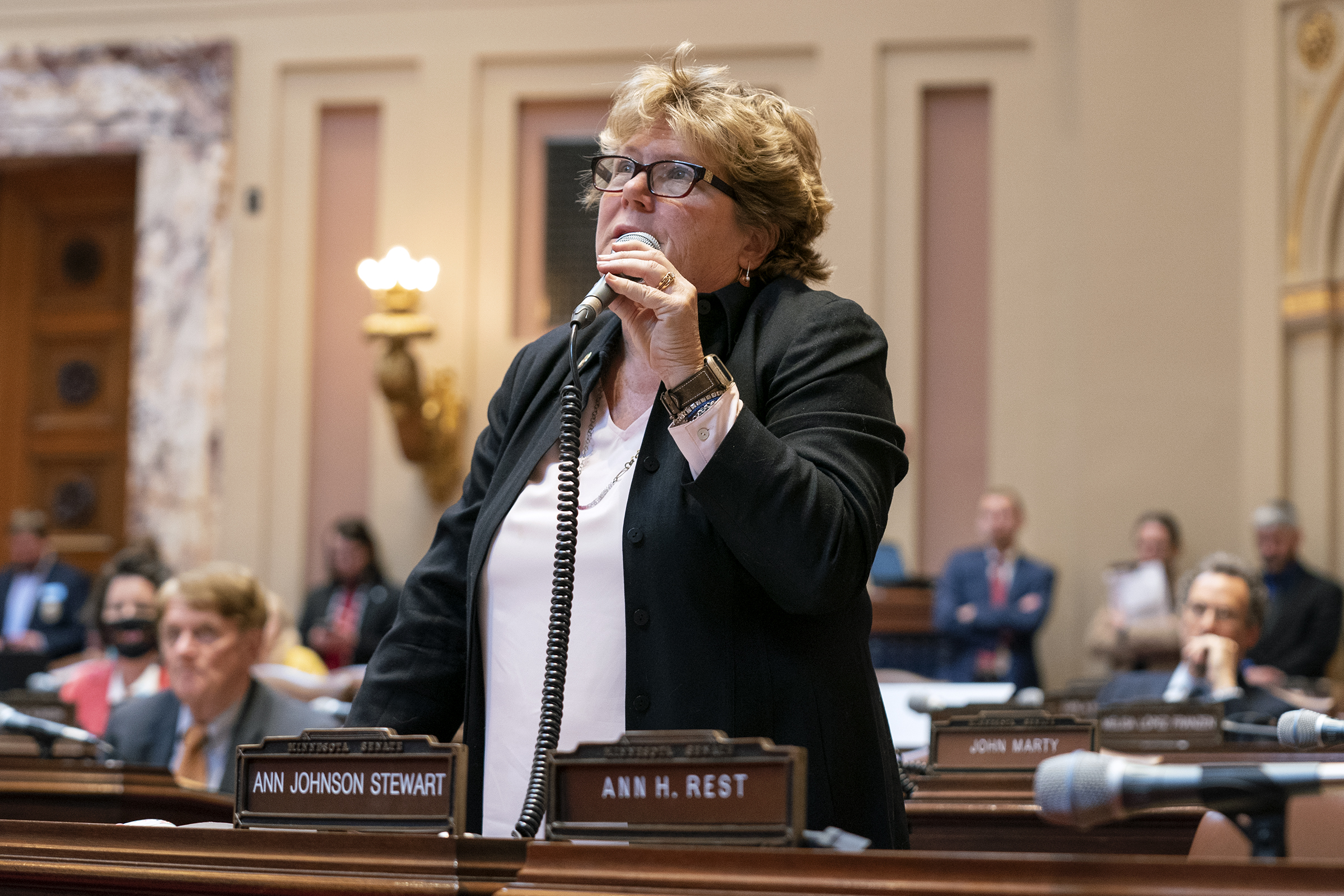
Senator Ann Johnson Stewart has co-authored key bonding legislation—including S.F. 4792 (authorizing $3.078 million for Spring Park municipal infrastructure) and S.F. 5242 (proposing a statewide public infrastructure grant program for local development)—to protect local property taxpayers from bearing the full burden of aging underground utility systems.
“Clean drinking water, treated wastewater, safe roads and bridges… have a huge impact on our state’s economy and the quality of our everyday lives. A bonding bill is a jobs bill. We can help Minnesotans by securing jobs for people, investing in our economy, and addressing the critical needs of our state for clean water, safe roads, and a healthy environment.” — Sen. Ann Johnson Stewart
Why Small Tax Bases Can’t Bear the Cost of Aging Water Systems
As local community journals like the Laker Pioneer and Sun Sailor have consistently tracked over the last decade, growing small towns surrounding Lake Minnetonka are facing a compounding deficit in underfunded water infrastructure upgrades. Just this past summer, the Pioneer reported that the City of Mound was forced to self-fund the remainder of a massive new water treatment plant after missing out on 2026 state bonding, while neighboring Minnetrista had to approve a 40% hike to annual water utility base charges just to keep up with system costs. Water mains, water treatment facilities, and sanitary sewer networks built decades ago across Minnesota are reaching the end of their design life. For smaller cities in District 45, replacing a single mile of water main or upgrading a treatment plant can cost millions of dollars.
The Math Problem
If a city of 2,000 residents must absorb a $5 million water infrastructure overhaul without state assistance, local property tax assessments and monthly municipal water rates skyrocket. Smaller tax bases simply do not have the population density to spread out these heavy capital costs.
The State Bonding Solution
Capital bonding bills use state-issued general obligation bonds to partner with cities. By funding municipal water projects through the Public Facilities Authority (PFA), the state leverages its AAA credit rating to deliver low-interest loans and direct grants, keeping local utility rates stable.
Engineering Insight: Capital Matching Grants
The Impact: Prevents small suburban cities from hitting local debt limits and shields homeowners from sudden 30%+ water rate hikes.
Targeted Investment: S.F. 4792 & West Metro Infrastructure
Senator Johnson Stewart’s engineering background directly informs her bonding priorities. In the legislative session, she chief-authored S.F. 4792, a bill proposing $3.078 million in state bond proceeds for critical municipal infrastructure improvements along Sunset Drive in Spring Park.
What S.F. 4792 Aims to Deliver:
- Emergency Pipe Replacement: According to Hennepin County’s official Capital Improvement Program, the infrastructure along Sunset Drive (CSAH 51) was last fully reconstructed in 1969 and has completely reached the end of its useful life. This bill upgrades these 50-year-old underground pipes to ensure reliable water pressure, volume, and quality.
- Street Reconstruction & Utility Integration: Coordinating water pipe replacement with surface road repairs to prevent digging up fresh pavement twice—a core civil engineering efficiency practice.
- Multiuse Trail & Public Access: Combining underground utility upgrades with modern surface drainage and multi-use trail improvements to maximize public value for every dollar spent.
Senator Ann Johnson Stewart advocates for projects that fix the street surface while simultaneously replacing the decaying water mains underneath, ensuring that water infrastructure, sewer systems, and road work are integrated into single, cost-saving operations that protect taxpayer value and local water quality.
Statewide Infrastructure Grants for Sustainable Local Growth
Safe water infrastructure is the foundational requirement for housing affordability and economic development. You cannot build new workforce housing or attract local commercial investments if a city’s water treatment plant is already operating at maximum capacity.
S.F. 5242 Overview
Introduced in April 2026 and referred to the Jobs and Economic Development Committee, Senator Johnson Stewart chief-authored S.F. 5242 to establish a statewide public infrastructure grant program designed to support housing densification and local economic development.
Key Proposed Provisions:
- Matching Grants: The program would provide matching state grants to cities and Housing and Redevelopment Authorities (HRAs) for water supply systems, sewer extensions, and stormwater management necessary for housing expansion.
- Fiscal Accountability: The bill requires non-state funding commitments to ensure state investments are paired with local and private financial responsibility.
- Job Creation: By funding municipal infrastructure upgrades, the program directly creates local trade jobs, supporting the domestic workforce.
Engineering Insight: Pre-Development Water Density
Definition: Expanding main water lines and hydraulic treatment capacity before housing density is built.
The Impact: Prevents water main pressure drops and sewer overflows when new multi-family or workforce housing units come online.
Fiduciary Oversight: Building for a 50-Year Life Cycle
True fiscal responsibility means spending bonding dollars wisely:
- Life-Cycle Costing: Every municipal water grant advocated by Senator Johnson Stewart requires engineering review to ensure components are built to last a 50+ year life cycle—not quick fixes that deteriorate in a decade.
- Protecting Water Quality at the Source: Combining local municipal water grants with strict groundwater protections ensures that treatment facilities don’t have to spend millions filtering out avoidable commercial contaminants.