
Infrastructure Equity
Infrastructure Equity & the 40% Mandate
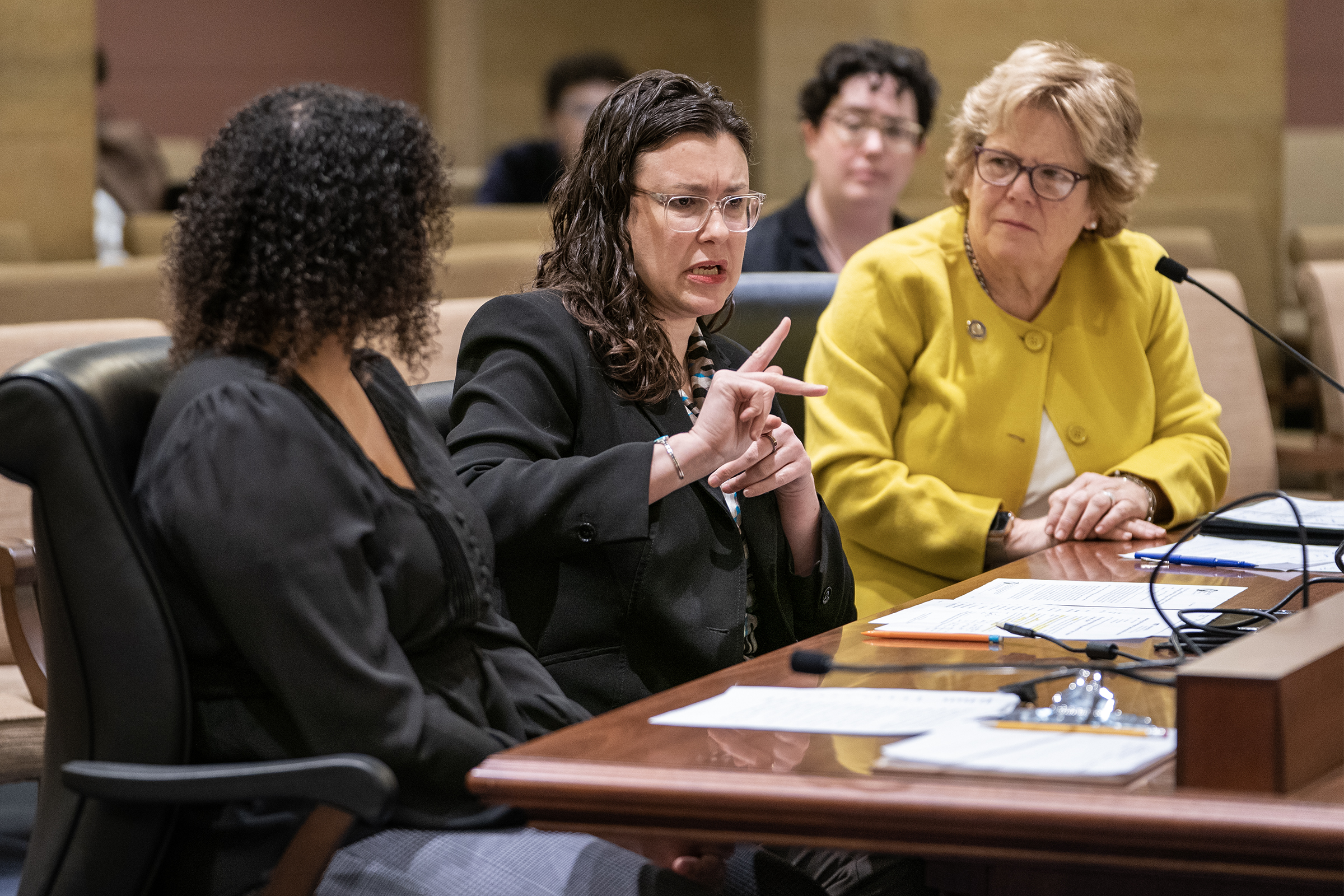
When extreme weather damages a municipal water system or washes out a critical county road, local governments are forced to cover the massive repair costs. As a civil engineer, Ann understands that this creates a dangerous disparity: wealthy suburban cities with large tax bases can afford to issue municipal bonds to upsize their infrastructure, while rural towns and disadvantaged neighborhoods are left critically exposed to the next major storm.
As Ann stated in the Climate Superfund Act’s introductory press conference: “This year at the state, we have received billions of dollars in bonding requests. Now, consider that the bonding bill, if we pass it, will cover 1/6th of the amount of requests we’ve received already.”
A community’s ability to survive the physical realities of climate change should never be dictated by its zip code or its property wealth.
The Infrastructure Wealth Gap
Under traditional funding models, infrastructure adaptation is deeply inequitable. Small rural municipalities and under-resourced urban neighborhoods simply do not have the discretionary budget to proactively tear up streets and install larger storm sewers. Instead, they are forced into a reactive cycle—waiting until a system completely fails before emergency state or federal dollars become available.
To break this cycle, Senator Ann Johnson Stewart co-authored S.F. 4126 (The Minnesota Climate Superfund Act) to not only recover the costs of climate adaptation from historical polluters but to ensure those recovered funds are distributed equitably across the state.
Protecting Every Taxpayer
By establishing the 40% mandate, S.F. 4126 ensures that the capital recovered from the world’s largest greenhouse gas emitters flows directly into the Minnesota towns that need it most. It guarantees that rural townships managing eroding bridge abutments and under-resourced urban centers dealing with chronic flooding receive priority access to the Greenhouse Gas Pollution Account.
While powerful corporate lobbying groups like the U.S. Chamber of Commerce have aggressively pushed back against the legislation, S.F. 4126 represents a vital safety net for Minnesota municipalities. It stops the historical practice of passing the buck to local taxpayers and guarantees that no community is left to fend for itself when their infrastructure reaches its breaking point.
Policy Insight: Disadvantaged Communities & Prevailing Wage
The Spec: S.F. 4126 codifies the core principles of the federal Justice40 Initiative into Minnesota state law. The statutory text explicitly mandates that the state must adopt procedures ensuring “at least 40 percent of disbursements from the account are for climate change adaptation projects that benefit disadvantaged communities”.
The Fiscal Reality: Infrastructure equity isn’t just about where the projects are built; it’s about who builds them. To protect local workers, S.F. 4126 legally requires that every dollar spent from the fund must “increase local employment opportunities” and that all construction contracts “must pay the prevailing wage rate” .
As a civil engineer, Ann knows that the best time to fix a bridge is before it fails. Support Her 2026 Campaign Here