
Efficient Public Transit
Outline: A growing economy requires a transportation network that moves people reliably and cost-effectively. As Vice Chair of the Senate Transportation Committee and a licensed civil engineer, Senator Ann Johnson Stewart focuses on engineering-backed transit reliability—eliminating bottlenecks and optimizing routes to reduce highway congestion and deliver a measurable economic return for taxpayers.
Key Takeaways:
- Engineering-Driven Efficiency: Utilizing signal synchronization, Transit Signal Priority (TSP), and bus-only shoulders so public transit moves through intersections rather than idling in traffic.
- Connecting the Suburban Workforce: Championing flexible micro-transit solutions in the West Metro to link residents to regional hubs and support local businesses facing labor shortages.
- Fiduciary Oversight: Protecting transit operating funds while strictly auditing the cost per passenger mile and integrating multimodal planning to extend the lifespan of existing pavement.
Advancing Policies That Make Public Transportation More Efficient

A modern, growing economy requires a transportation network that moves people reliably, safely, and cost-effectively. Efficient public transit is not merely an alternative to driving; it reduces congestion on arterial highways, expands workforce access for local businesses, and lowers road maintenance costs across District 45 and the entire state.
As the only licensed Civil Engineer (PE) in the Minnesota Senate and Vice Chair of the Senate Transportation Finance and Policy Committee, Senator Ann Johnson Stewart evaluates transit through an engineering lens: maximizing passenger-mile throughput, eliminating bottlenecks, optimizing signal coordination, and ensuring every public dollar invested delivers measurable mobility gains.
Engineering-Driven Transit Efficiency & Reliability (TSMO)
According to the Minnesota Department of Transportation’s Transportation Systems Management and Operations (TSMO) Strategic Plan, operational treatments improve transit on-time reliability by 5% to 13% and significantly reduce corridor travel delays without the need for costly full-width highway expansions. Predictable travel times are the single highest driver of commuter choice and system efficiency.
- Signal Synchronization & Priority Corridors: Equipping high-frequency bus and transit corridors with smart signal priority (TSP) so public transit moves through intersections rather than idling in traffic.
- Bus-Only Shoulders & Dedicated Right-of-Way: Expanding low-cost, high-capacity shoulder-running transit routes on key West Metro arteries to bypass rush-hour chokepoints.
The Economic Multiplier of Transit
State transportation economic research proves that public transit delivers an immediate local return—generating $2.51 in direct community and economic benefits for every $1 invested.
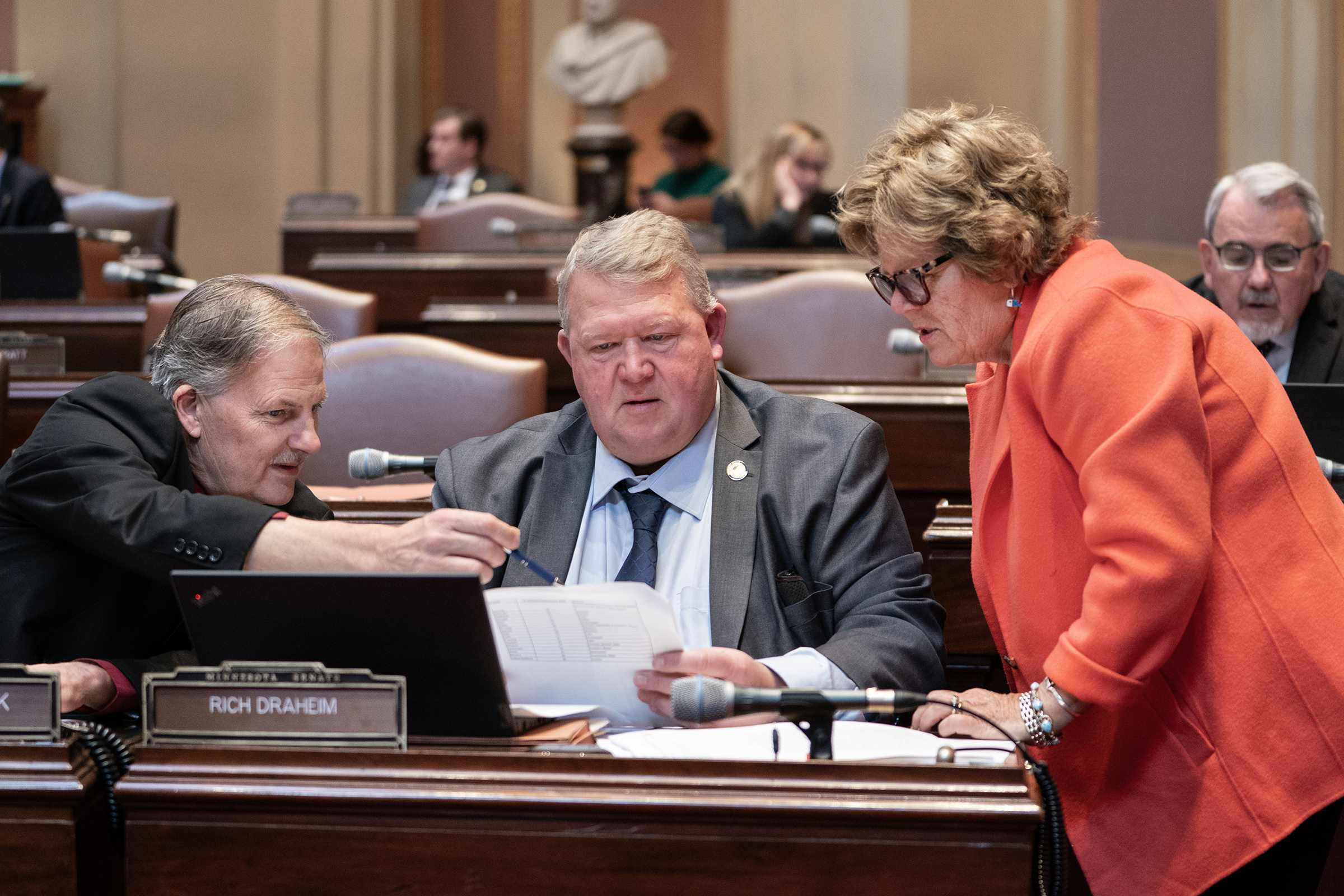
“This transportation budget strikes a thoughtful balance—making strategic investments where they’re needed most while responsibly managing our resources. It prioritizes core services and modernizes our policies to meet the changing needs of Minnesotans. Every person in our state deserves a safe, dependable transportation system, and this bill moves us closer to that goal.” — Senator Ann Johnson Stewart
Economic Return & Connecting the Suburban Workforce
MnDOT’s Greater Minnesota Transit Investment Plan emphasizes that public transit is a critical economic driver that provides reliable access to jobs and healthcare while reducing the cost of travel to work. In the Twin Cities region, this economic multiplier is massive. According to the Metropolitan Council, strategic transit investments have spurred over $8.4 billion in private economic development along existing and future transit corridors, efficiently connecting workers to tens of thousands of jobs at major employment hubs, medical centers, and retail districts.
- Suburban Micro-Transit & First/Last-Mile Links: Championing flexible, on-demand micro-transit solutions for District 45 communities (Plymouth, Minnetonka, Wayzata, Mound) to connect residents seamlessly to regional transit hubs and park-and-rides.
- Supporting Local Commerce: Connecting retail, medical, and manufacturing employers across the West Metro with reliable commuter access to address regional labor shortages.
Fiduciary Oversight & Multimodal Highway Integration
The MnDOT 20-Year State Highway Investment Plan (MnSHIP) identifies a critical statewide funding gap where system preservation must be balanced with multimodal efficiency to prevent pavement degradation and arterial gridlock. Furthermore, the American Society of Civil Engineers advocates for integrated multimodal planning to lower per-capita road wear and extend the structural lifespan of existing pavement.
- Protecting Transit Operating Funds: Preserving dedicated state transit funding while enforcing strict audit metrics on operating cost per passenger mile.
- Active Transportation & Pedestrian Safety: Linking transit stops with safe pedestrian crossings, sidewalk connectivity, and protected bike infrastructure to ensure safe, accessible transit access across all seasons.
Help keep an engineer’s voice in the Senate. Support Her 2026 Campaign Here