
Bridge Scour
Outline: Extreme weather and frequent flash flooding are accelerating “bridge scour”—the dangerous erosion of soil around bridge foundations that leads to structural failure. Senator Johnson Stewart believes corporate polluters, not local taxpayers, should fund the critical engineering upgrades needed to stabilize our bridges against climate-driven flooding.
Key Takeaways:
-
The Climate-Infrastructure Threat: Heavier, more frequent storms produce high-velocity floodwaters that wash away the vital sediment supporting Minnesota’s highway and local bridge piers.
-
Proactive Engineering: Upgrading vulnerable bridges with deep foundation reinforcements and modern hydrology standards before a catastrophic structural failure occurs.
-
Corporate Accountability: Utilizing a state Climate Superfund to ensure the fossil fuel industry pays for these multi-million-dollar resilience projects, protecting municipal and county transportation budgets.
Bridge Scour: The Silent Threat to Minnesota's Foundations
When we look at a bridge, it’s easy to focus on what’s above the water—the steel beams, the concrete decks, and the guardrails. But as a civil engineer, Ann knows that the most critical part of the structure is completely invisible, buried deep beneath the riverbed.
As climate change accelerates extreme weather events across Minnesota, our water systems are experiencing unprecedented flow volumes and velocities that crash into our engineering systems that hold up our bridges. This rapid water movement triggers a destructive physical phenomenon known as Bridge Scour, the primary structural threat to our state’s transportation network.
The Anatomy of an Underwater Erosion Crisis
According to the Federal Highway Administration (FHWA) HEC-18 technical guidelines, Bridge Scour is defined as the physical removal of sediment—such as sand, gravel, and rocks—from around bridge abutments or piers caused by swiftly moving water.
When a river’s velocity increases during severe storm events, the water aggressively scoops away the stabilizing bed material holding the bridge’s vertical supports in place. Because this erosion occurs entirely underwater, it is virtually impossible to notice until it’s too late, making bridge scour the #1 cause of bridge failure in the United States. If governments don’t invest in evaluating and reinforcing this critical infrastructure, these structural failures will continue to happen.
Engineering for Higher Velocities
Current bridge networks across the country were built using historical hydraulic data that assumed river flows would remain within predictable, stable limits. The modern reality has entirely broken those old mathematical models.
As intense precipitation occurs at higher rates and with greater frequency, the modern reality has entirely broken those old mathematical models. When heavy downpours overwhelm our river basins, the sheer volume of water forces a river’s speed past its critical design threshold. Higher velocities translate directly into deeper, more aggressive scour cavities, destabilizing the subterranean footings and threatening the baseline safety of our primary transit corridors that our old systems built on rainfall data of the 60s and 70s.
Securing the Infrastructure Shield
“The climate superfund will allow us to obtain revenue from the huge corporations that have caused the problem. It makes the polluters pay and relieve some of the pressure on local taxpayers and agencies that are being hit with these huge costs.” — Senator Ann Johnson Stewart
Engineering Insight: Scour Depth & Critical Velocity
The Spec: Critical Velocity is the precise speed threshold at which a river’s flow gains enough kinetic energy to lift, move, and wash away bed sediment. Scour Depth is the vertical measurement of the cavity carved out around a pier during these high-velocity events.
The Engineering Reality: Once a river surpasses its critical velocity, scour depth deepens exponentially. To protect a bridge from catastrophic failure, engineers must install heavy physical armor—like massive structural rip-rap blocks or reinforced concrete aprons—to shield the footings from water friction.
Traditional funding mechanisms force local municipalities to wait until a bridge is flagging structural deficiencies before emergency repair dollars are unlocked. This reactive approach is both dangerous and fiscally irresponsible.
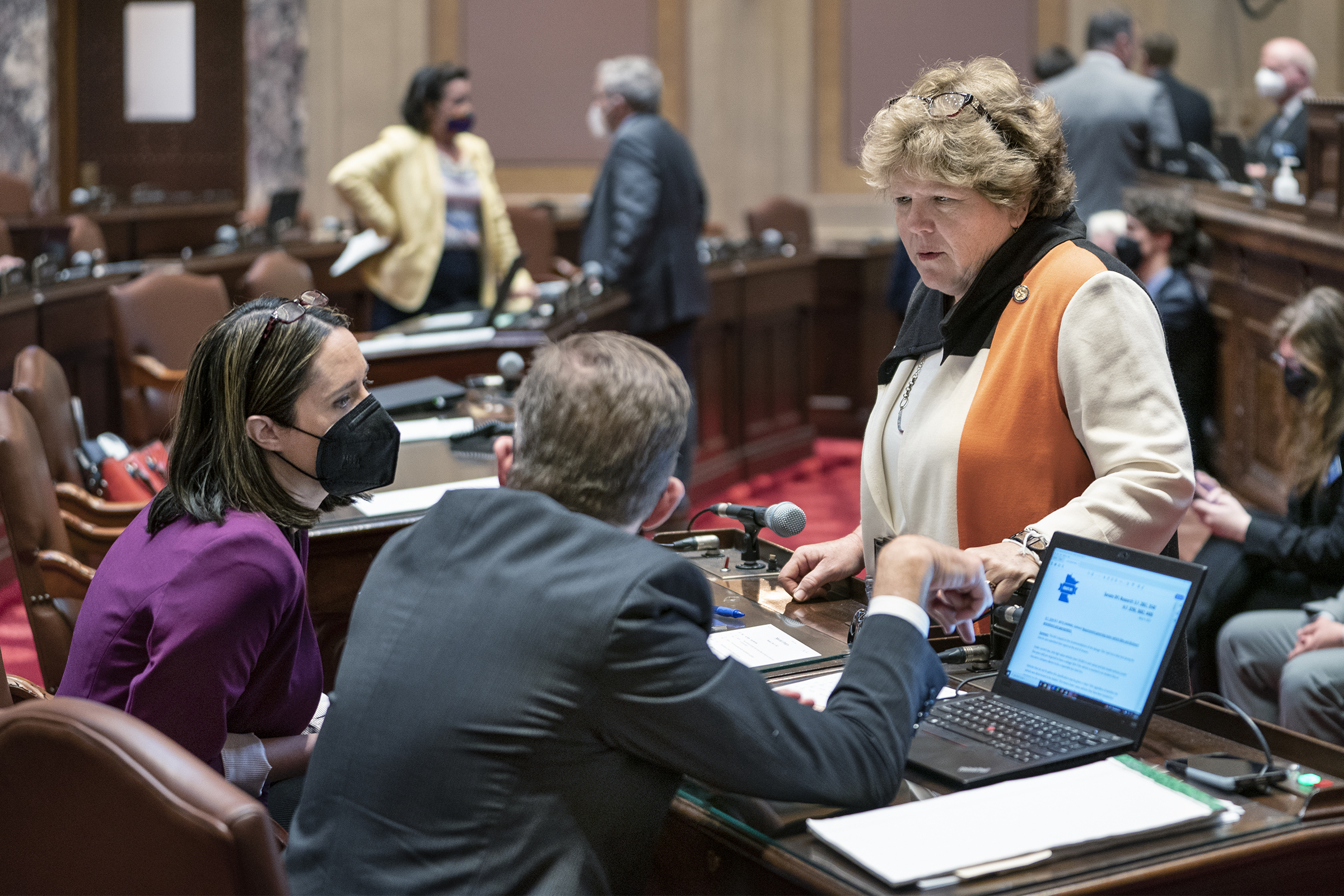
S.F. 4126 (The Climate Superfund Act) completely flips this model by establishing a proactive funding stream. By recovering capital from the global entities historically responsible for the emissions driving these extreme weather shifts, the state can systematically deploy structural reinforcements before a failure occurs.
Investing in foundation armor, structural underpinning, and real-time sonic scour-monitoring sensors allows Minnesota to close the design gap and protect local taxpayers from bearing the multi-million dollar cost of structural washouts.
As a civil engineer, Ann knows that the best time to fix a bridge is before it fails. Support Her 2026 Campaign Here
Go Back to Climate Superfund Page
Look Further Into This Issue: