
Climate Superfund
Outline: Local taxpayers should not be forced to foot the multi-billion-dollar bill for climate-driven infrastructure damage. A state Climate Superfund would hold the world’s largest fossil fuel corporations financially responsible for funding Minnesota’s extreme weather resilience and infrastructure upgrades.
Key Takeaways:
-
Making Polluters Pay: Holding the largest corporate greenhouse gas emitters legally accountable for the environmental damage they caused, rather than passing the check to everyday Minnesotans.
-
Protecting Local Taxpayers: Shifting the massive costs of climate adaptation—like replacing washed-out roads and upgrading overwhelmed municipal storm sewers—off the backs of local property owners.
-
Engineering for Extreme Weather: Creating a dedicated, corporate-funded state account to proactively upgrade bridges, water systems, and electrical grids to withstand severe modern weather events.
The Physics of Resilience: Engineering a Climate Resilient Minnesota
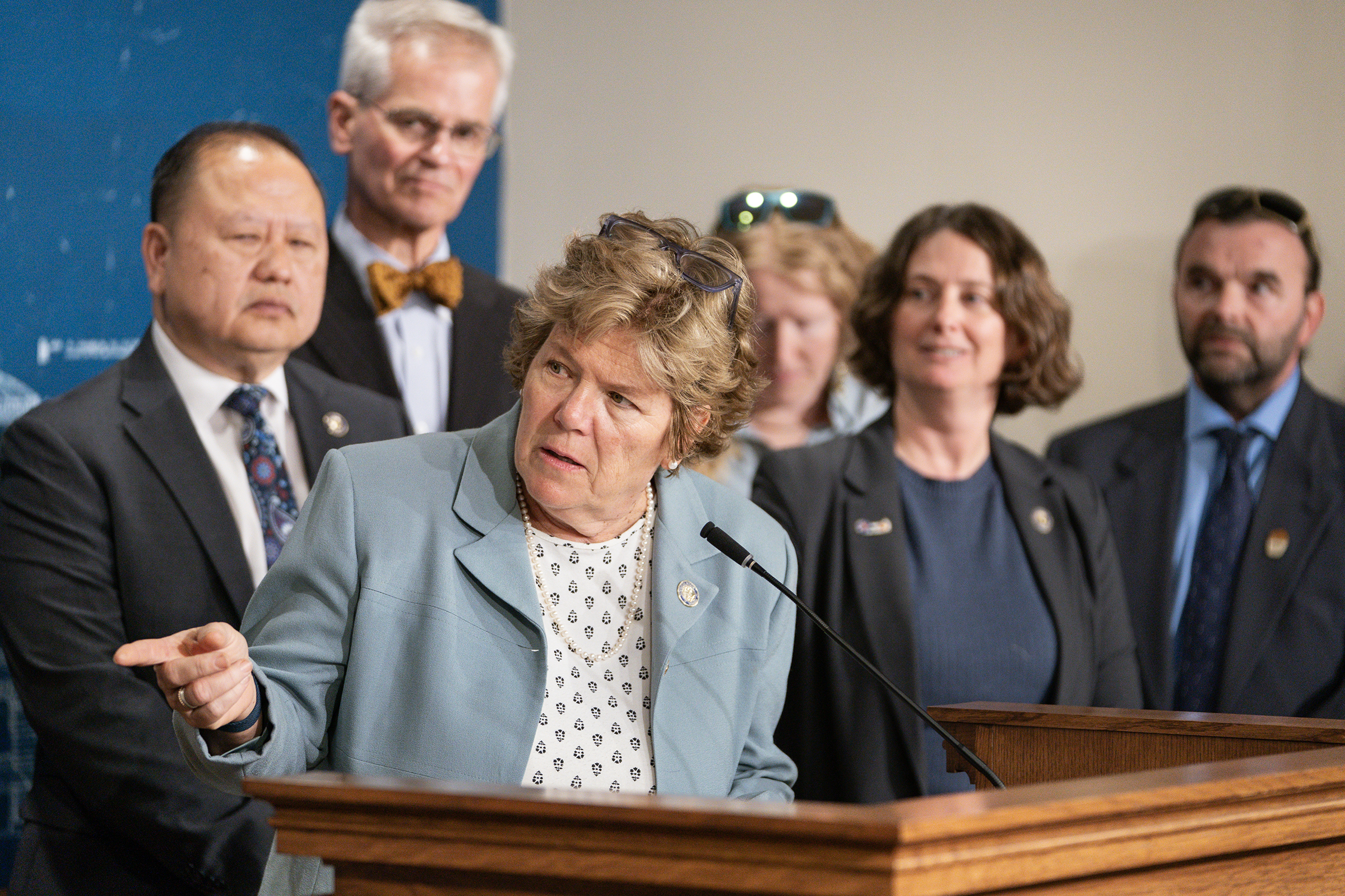
Minnesota’s infrastructure is currently caught in a “Design Gap.” Most of our bridges, culverts, and storm sewers were built using climate data from the 1960s and 70s. Today, that math is obsolete.
As a civil engineer, Ann Johnson Stewart understands that we aren’t just fighting climate change—we are fighting the physics of an overwhelmed system. S.F. 4126 (The Climate Superfund Act) is the engineering solution to bridge this gap, ensuring our infrastructure is reinforced for the storms of 2026 and beyond.
I. The Design Gap: Why 1970s Math Fails in 2026
Our state’s drainage systems were designed for a world that no longer exists. Engineers rely on “Precipitation-Frequency” data to determine how big a pipe or bridge opening needs to be. For decades, we used data from 1961 (TP-40) and 1977 (HYDRO-35).
The Reality: According to the NOAA Atlas 14 (Volume 8), rainfall intensity in Minnesota has shifted significantly. What we used to call a 1% AEP (Annual Exceedance Probability)—the “100-year storm”—is now occurring with much higher frequency. In many parts of the state, a storm that used to have a 1% chance of happening in any given year is now occurring once a decade.
This shift means our infrastructure is effectively “shrinking” relative to the volume of water it must carry. When a storm sewer designed for 1977 rainfall is hit by a 2026 storm, the system reaches Hydraulic Capacity almost immediately. Without the funding mechanisms provided by S.F. 4126, municipalities are trapped in a cycle of “emergency thinking,” waiting for a catastrophic failure because they lack the tax base to proactively upsize their aging networks.
Engineering Insight: Hydraulic Capacity
Definition: The maximum volume of water a structure (like a storm sewer) can carry before it fails.
The Problem: When rainfall exceeds a pipe’s hydraulic capacity, the system “surcharges,” leading to flooded basements, street washouts, and catastrophic property damage.
“As a civil engineer, I know our infrastructure was designed to handle a specific volume. But when the ‘100-year storm’ becomes an every-decade event, our culverts and storm sewers reach ‘hydraulic capacity’—the point where the system fails. We aren’t just fighting climate change; we are fighting the physics of an overwhelmed system.” — Ann Johnson Stewart
II. The Infrastructure Threat: The Science of “Bridge Scour”
The greatest threat to Minnesota’s bridges isn’t just what happens on the road—it’s what happens underneath. As water levels rise and river velocities increase, we face a phenomenon known as Bridge Scour.
According to the Federal Highway Administration (FHWA) HEC-18 Manual, bridge scour is the #1 cause of bridge failure in the United States. It occurs when swiftly moving water removes sediment from around bridge abutments or piers, leaving the foundation “hanging” and prone to collapse.
S.F. 4126 provides the dedicated funding required to:
- Perform underwater scour inspections.
- Install “Rip-Rap” and modern armoring on vulnerable bridge footings.
- Upsize culverts to prevent “headwater” pressure from washing out rural roads.
Engineering Insight: Bridge Scour
Definition: The removal of sediment (sand and rocks) from around bridge abutments or piers, caused by swiftly moving water.
The Problem: Scour is the #1 cause of bridge failure in the United States.
III. The Fiscal Mechanism: Cost Recovery, Not a New Tax
Minnesota faces a $907 Million gap in infrastructure readiness. Currently, that bill is being paid by local property owners through emergency repairs and rising insurance premiums. S.F. 4126 shifts this burden back to the entities that altered the climate data our bridges rely on.
The “Polluter Pays” Model
The bill targets global companies responsible for over 1 billion metric tons of greenhouse gas emissions between January 1, 1995, and December 31, 2026 (S.F. 4126, Section 1). This is not a “tax” on Minnesotans; it is a Cost-Recovery Demand.
“This is not a new tax on Minnesotans. This is a cost-recovery demand. We are issuing an invoice to the global entities that altered the climate data our bridges rely on. They reaped the profits; they should help pay for the reinforcements.” – Ann Johnson Stewart
IV. Infrastructure Equity: The 40% Mandate
S.F. 4126 legally mandates that 40% of all superfund dollars be directed toward disadvantaged communities (S.F. 4126, Section 3). This ensures that safety is determined by engineering need, not by the wealth of a local zip code.
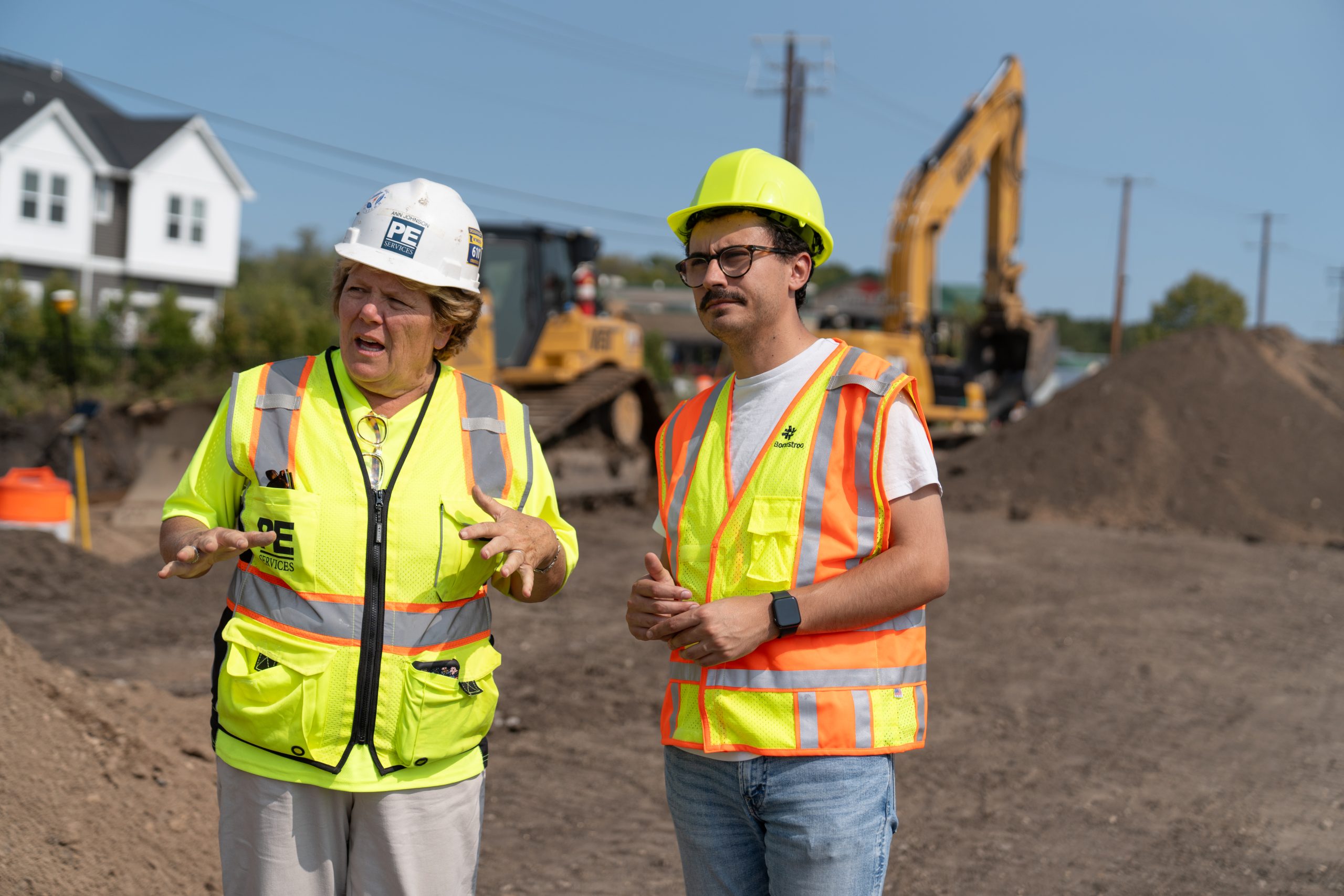
“Everyone deserves safe water and resilient roads, regardless of their town’s tax base. S.F. 4126 ensures that the ‘Polluter Pays’ account flows directly to the communities with the smallest property tax bases and the biggest infrastructure needs, not just the loudest voices in the room.” – Ann Johnson Stewart
As a civil engineer, Ann knows that the best time to fix a bridge is before it fails. Support Her 2026 Campaign Here
Look Further Into This Issue: